The carrot
Origin and history:
The carrot originates from the temperate regions of Europe and Western Asia. The Nabuco variety was developed at the Vegetable Research and Development Station (V.R.D.S.) in Buzau, Romania, and was bred to deliver high productivity and superior quality suited to the requirements of the local market.
Botanical characteristics:
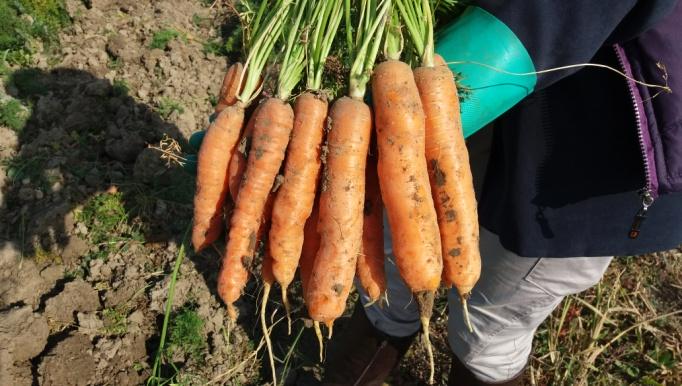
The Nabuco carrot is an early variety (100 days), with cylindrical, smooth roots of an intense orange colour. The roots have an average length of 18-20 cm and a weight ranging between 80-110 g, with a sweet core and a fine texture. The plant has well-developed green foliage, which makes harvesting straightforward.
Growing conditions:
The Nabuco carrot prefers light, sandy or loamy, well-drained soils with a neutral or slightly acid pH. Sowing is carried out in early spring (March-April) or in summer (for an autumn harvest), at an optimum temperature of 10-15°C. It is important to keep the soil moist during the early stages of development.
Care and maintenance:
This variety requires regular weeding and consistent irrigation to prevent the soil from drying out. Fertilising the soil with organic manure or compost helps to produce large, healthy roots. Excessive application of nitrogen fertilisers should be avoided, as this can impair root quality.
Propagation:
The Nabuco carrot is propagated from seed, which germinates in 10-14 days at temperatures above 8°C. The seedlings should be thinned to leave a distance of approximately 5-7 cm between plants, providing the space needed for the roots to develop.
Uses
The Nabuco carrot is ideal for fresh consumption, as well as for soups, stews, juices and preserves. Its sweet flavour and fine texture make it an excellent choice both for cooking and for eating raw. It is also a rich source of vitamin A, which benefits eye and skin health.