
Parsnip
Origin and history:
It originates from the Mediterranean region and has been grown since antiquity for its edible roots. The Daniel variety was developed at the Vegetable Research and Development Station (V.R.D.S.) in Buzau, Romania, and was bred for high adaptability and consistent yields of 35-40 t/ha.
Botanical characteristics:
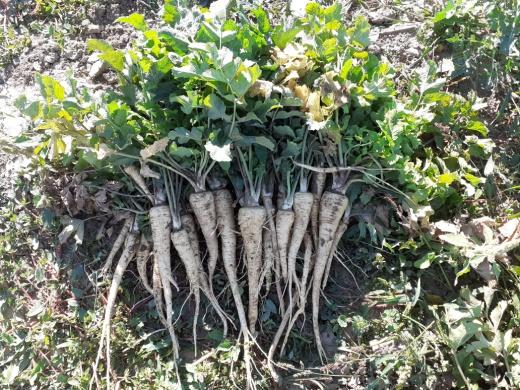
Daniel parsnip is a biennial herbaceous plant with cylindrical or slightly conical roots of a creamy white colour, 20-25 cm long and weighing 150 g on average, with a sweet, aromatic flavour. The leaves are large and deep green, and in the second year the plant can reach a height of 100-120 cm, when it produces yellow flowers borne in umbels.
Growing conditions:
Daniel parsnip prefers deep, well-drained soils with a neutral or slightly alkaline pH. Sowing is carried out in early spring (March-April) directly in the field, in loose soil. It is a cold-hardy species, withstanding low temperatures even at the seedling stage.
Care and maintenance:
Caring for Daniel parsnip involves weeding and moderate irrigation, particularly during dry spells. Fertilising with organic fertilisers helps to produce roots of superior quality. To prevent the roots from forking, it is essential that the soil be well prepared before sowing, free of stones and other obstacles.
Propagation:
Daniel parsnip is propagated from seed, which germinates in approximately 14-20 days at temperatures above 8-10°C. The recommended spacing is 30-40 cm between rows and 8-10 cm between plants, in order to provide sufficient room for nutrition and development.
Uses
Daniel parsnip is valued for its roots, which are used in soups, broths, purées and side dishes on account of their sweet, aromatic flavour. It also offers health benefits, being rich in vitamins, minerals and fibre, with antioxidant and digestive properties.