
Description
Origin and history: Marigolds (Tagetes patula) are native to South America and are known for their brightly coloured flowers. The Nanuk variety was created at the Vegetable Research and Development Station (V.R.D.S.) in Buzau, Romania.
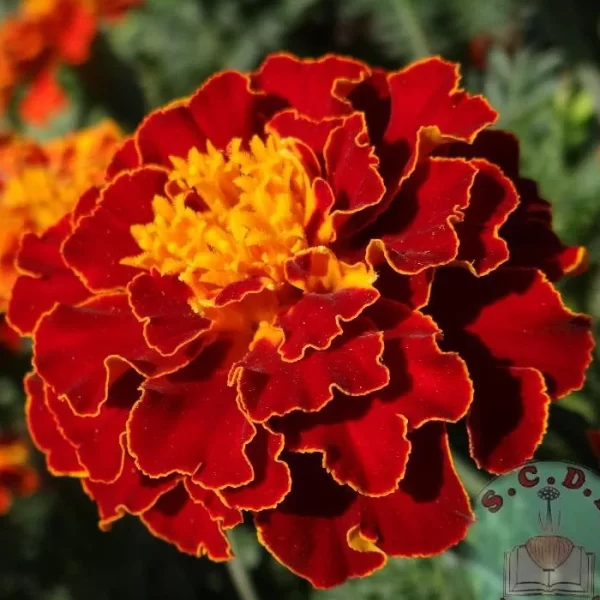
Botanical characteristics: Nanuk marigolds are herbaceous annuals reaching a height of 40-42 cm. The plant forms a compact, well-branched bush with pinnate, dark green leaves. The flowers are compound inflorescences of the capitulum type (flower heads), in which numerous individual florets are arranged closely together on a common structure known as the receptacle, and they are an intense reddish-brown in colour.
Growing conditions: Nanuk marigolds prefer sunny positions and well-drained soils of moderate fertility. They may be planted during the spring months (March-May) and flower abundantly from midsummer (July) until the first autumn frosts. Watering should be carried out regularly, while avoiding excess water.
Care and maintenance: These flowers are relatively easy to look after. It is beneficial to feed them with a balanced fertiliser every two weeks during the growing season. Deadheading spent flowers helps to extend the flowering period and to keep the plants looking neat.
Propagation: Nanuk marigolds may be propagated from seed, sown directly in the garden once the risk of frost has passed, or indoors 6-8 weeks before the last frost. Seed germination generally takes 5-10 days at a temperature of 20-22°C.
Uses: Nanuk marigolds are used in gardens, parks, flower beds and containers on account of their decorative appearance and vibrant colours. They also have insect-repellent properties, which benefits the other plants growing around them.