
Description
Origin and history: Cosmos (Cosmos bipinnatus) is native to Mexico and Central America. The Agata variety is prized for its vibrant and hardy flowers and is often grown in gardens for its colour and beauty. It is popular for its responsiveness to climate and soil, flowering generously throughout the growing season.
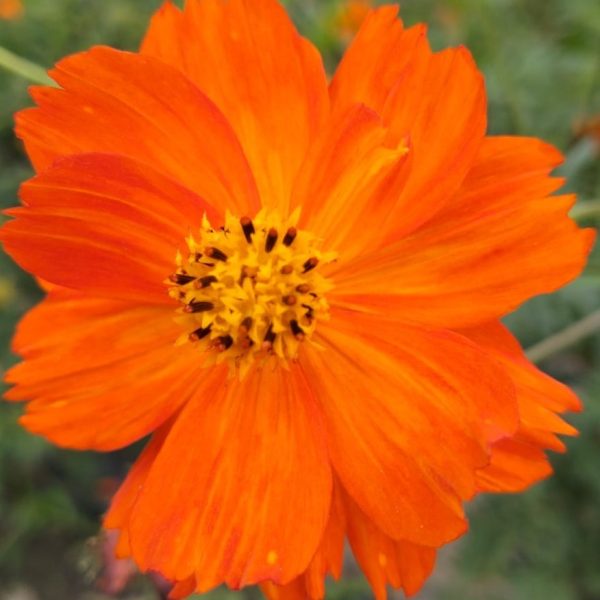
Botanical characteristics: Agata Cosmos is an annual, herbaceous plant reaching a height of 60-90 cm. The plant is well branched, with delicate, pinnate leaves of a light green colour. The variety is distinguished by its brick-red ligulate ray florets and its yellow tubular disc florets, with a diameter of approximately.
Growing conditions: Agata Cosmos prefers sunny positions and well-drained soils, but is fairly tolerant of different soil types and weather conditions. It is planted in spring once the risk of frost has passed and flowers continuously from summer until the first frost of autumn. It requires moderate watering, while avoiding waterlogging of the soil.
Care and maintenance: Agata Cosmos is an easy plant to look after. It does not require intensive fertilisation and often grows well in average soils. Occasionally, applying a balanced fertiliser is useful in order to stimulate growth and flowering. Removing spent flowers can extend the flowering period and keeps the plant looking attractive.
Propagation: Agata Cosmos is propagated from seed, sown directly in the garden once the risk of frost has passed. The seed generally germinates in 7-10 days at a temperature of approximately 18-25°C. Young plants can be thinned to allow proper development.
Uses: Agata Cosmos is widely used in the landscaping of gardens, parks and flower beds thanks to its decorative appearance and intense colours. It is also an excellent choice for bouquets and floral arrangements thanks to its large and attractive flowers.